2026.07.30 Professor Samukawa’s Article Published in the July 2026 Issue of “Koryu(交流)”
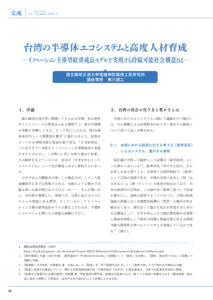
An article authored by Professor Samukawa, titled “Taiwan’s Semiconductor Ecosystem and Advanced Human Resource Development: What is the Sustainable Social Structure that Realizes an Innovation-Driven Economic Growth Model?”, has been published in the July 2026 issue of Koryu(交流), a Taiwan information magazine issued by the Japan-Taiwan Exchange Association.
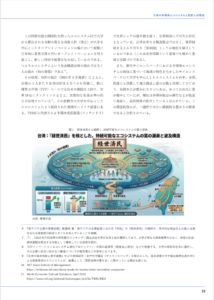
The article points out that at the core of Taiwan’s highly innovation-driven economic growth lies a unique social structure defined as a “University-centered ecosystem.” It explains that this ecosystem is rooted in the philosophy of 経世済民 (mutual support and public well-being). By circulating knowledge as a unified community across industry, government, and academia, Taiwan successfully balances world-leading technology with societal well-being, while concurrently driving advanced human resource development within this ecosystem framework.
For more details, please refer to the attached file,
2026.07.30 台湾情報誌『交流』2026年7月号に寒川教授の記事が掲載されました。
日本台湾交流協会の台湾情報誌『交流』(2026年7月号)に、寒川誠二教授が執筆した記事「台湾の半導体エコシステムと高度人材育成 ―イノベーション主導型経済成長モデルを実現する持続可能社会構造とは―」が掲載されました。
本記事では、台湾が高度なイノベーション主導型の経済成長を実現している根幹には、独自の「大学を中心としたエコシステム」という社会構造があると指摘しています。このエコシステムは、助け合いを意味する「経世済民」の哲学に基づいており、産官学が運命共同体として知を循環させることで、世界トップレベルの技術と幸福度を両立させていること、そしてその仕組みの中で高度な人材育成が行われていることを解説しています。
同時に、日本が半導体産業を復権し持続可能な社会を目指すための課題として、人的資本へのシフトや明確な役割分担に基づくエコシステムの構築を提言しています。
詳細につきましては、参照ファイル「台湾の半導体エコシステムと高度人材育成.pdf」をぜひご覧ください。